- June 19, 2026
Wood pelleting is one of the fastest-growing processes in the renewable energy sector. As the world moves away from fossil fuels, wood pellets have emerged as a clean, efficient, and sustainable energy source for homes, industries, and power plants. But what exactly is wood pelleting, and how does the process work? This guide covers everything you need to know — from raw materials to finished pellets.
What Is Wood Pelleting?
Wood pelleting is the process of compressing dry biomass material — such as sawdust, wood shavings, wood chips, or agricultural residues — into small, uniform cylindrical pellets. These pellets are typically 6–8 mm in diameter and 10–30 mm in length. The process uses heat, pressure, and a binding die inside a pellet mill to form these compact energy-dense units. Wood pellets are used as fuel in residential heaters, industrial boilers, and biomass power plants.
The Wood Pelleting Process Step by Step
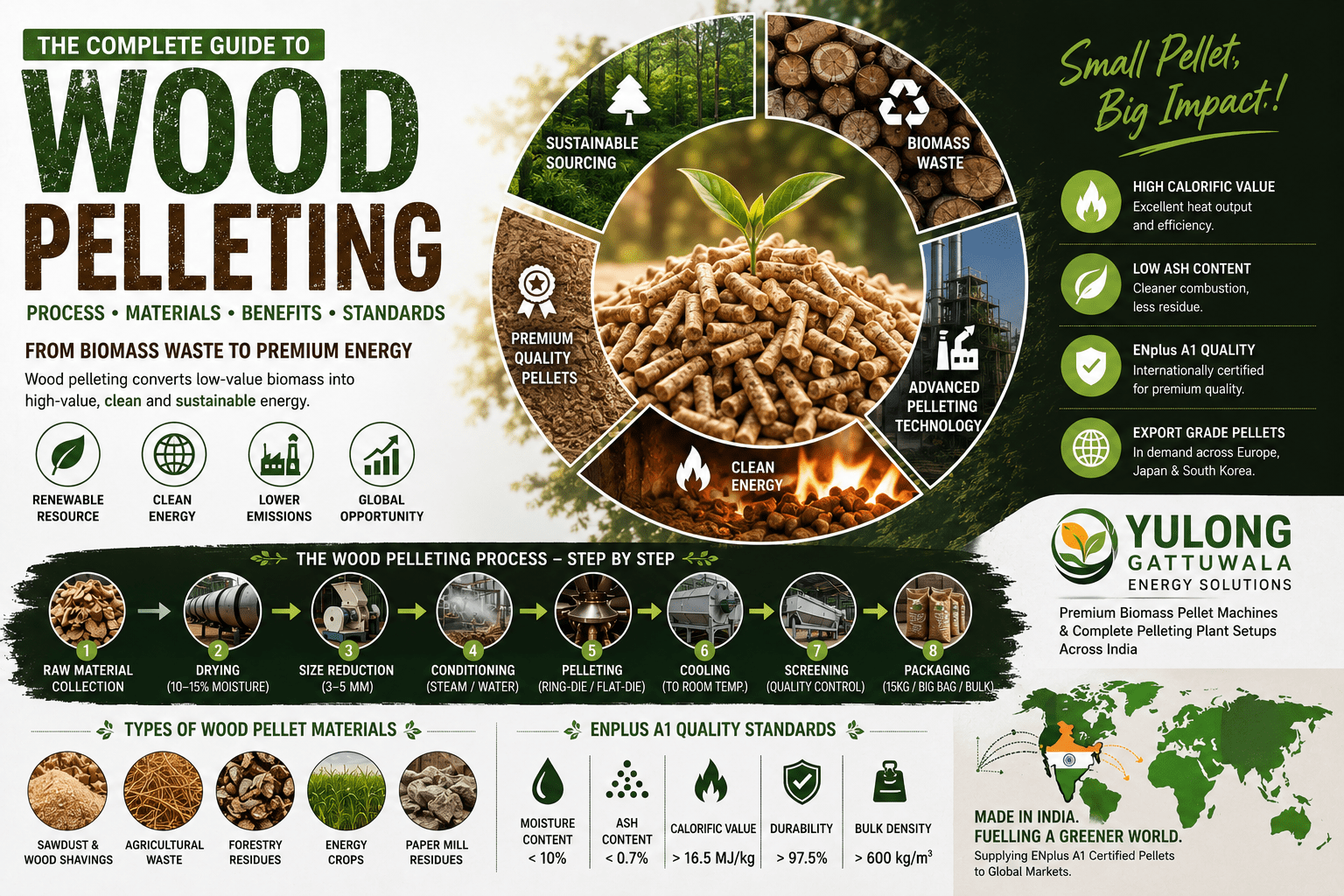
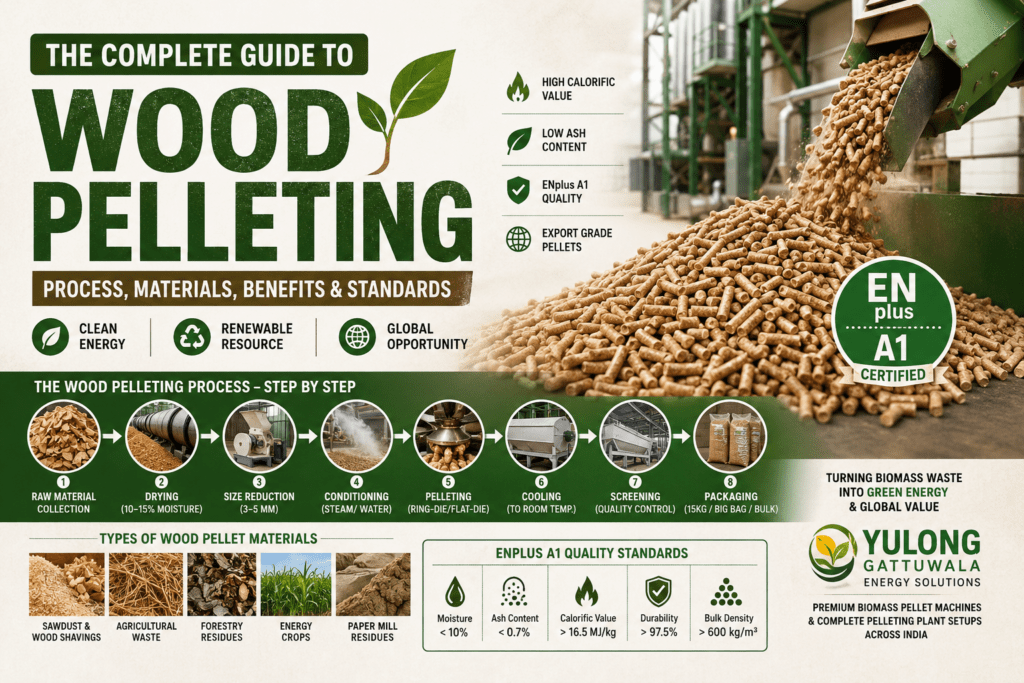
The pelleting process involves several key stages, each critical to producing a high-quality pellet that meets ENplus A1 standards:
• Raw material collection: Sawdust, wood chips, agricultural waste, forestry residues
• Drying: Moisture content must be reduced to 10–15% before pelleting
• Size reduction: Hammer mills grind material to 3–5 mm particle size
• Conditioning: Steam or water is added to soften the lignin binder
• Pelleting: Material is forced through a ring-die or flat-die pellet press
• Cooling: Hot pellets are cooled to room temperature in a pellet cooler
• Screening: Fines and broken pellets are removed for quality control
• Packaging: Pellets are bagged in 15 kg, big bags, or sent bulk for export
Types of Wood Pellet Materials
Almost any lignocellulosic biomass can be used in wood pelleting. Common feedstocks include:
• Sawdust and wood shavings from sawmills
• Agricultural waste: paddy straw, sugarcane bagasse, groundnut shells
• Forestry residues: bark, branches, logging waste
• Energy crops: miscanthus, switchgrass, willow
• Paper mill sludge and pulp residues
Why Wood Pelleting Is Important for India
India generates enormous volumes of agricultural biomass waste annually — over 500 million tonnes — much of which is openly burned, causing severe air pollution. Wood pelleting converts this waste into a clean, exportable fuel. Indian manufacturers like Yulong Gattuwala Energy Solutions are turning this challenge into an economic opportunity by producing ENplus-certified pellets for export to Europe and Japan, where demand is rapidly growing due to coal-to-biomass conversion mandates.
Quality Standards in Wood Pelleting
For export markets, pellets must meet strict international standards. The ENplus A1 certification is the most recognised global standard for premium wood pellets. It requires:
• Moisture content: below 10%
• Ash content: below 0.7%
• Calorific value: above 16.5 MJ/kg
• Mechanical durability: above 97.5%
• Bulk density: above 600 kg/m³
Wood pelleting is a transformative process that converts low-value biomass waste into high-value, clean energy fuel. With rising global demand — especially from Europe, Japan, and South Korea — and India’s abundant biomass resources, wood pelleting presents a massive business opportunity. Yulong Gattuwala Energy Solutions supplies premium biomass pellet machines and complete pelleting plant setups across India.
CTA: Looking to set up a wood pelleting plant in India? Contact Yulong Gattuwala Energy Solutions today for a free consultation and plant design.
What Is Wood Pelleting? A Complete Beginner’s Guide 1